
Blackjack Surrender Is a Timing Trick, Not a Soft Escape
Early surrender and late surrender look identical at the felt—a player slides two fingers across the layout, the dealer sweeps half the bet in—but they are not the same rule. Late surrender is offered only after the dealer has checked for blackjack on an ace or ten; early surrender happens before that check, which is why the verifiable basic-strategy shortcuts are so sparse: late surrender is correct on a hard 16 against a dealer 9, 10, or Ace, and on a hard 15 against a dealer 10.
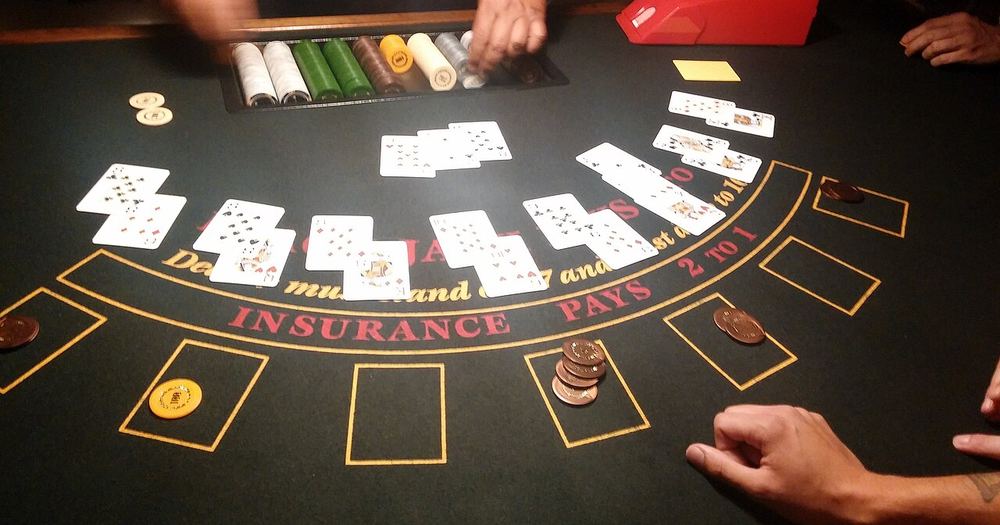

Surrender Is a Timing Rule, Not a Free Choice
Surrender means the player forfeits exactly half the wager and the hand ends. That part is universal. The split between early and late surrender turns entirely on when the decision happens relative to the dealer’s blackjack check.
With late surrender, the dealer first looks for blackjack whenever an ace or a ten-value card is showing. If the dealer has blackjack, the hand is already over and the player cannot surrender; the full bet is lost unless the player also holds a natural. Only after that check passes does the house offer surrender. Late surrender is offered after the dealer checks for blackjack when the upcard is an ace or a ten. Early surrender lets the player pay half before the dealer checks, which matters most in no-hole-card games where the dealer does not take a second card until after players act.
Late surrender happens after the dealer has checked for blackjack, early surrender before. The practical difference is enormous. Early surrender defuses a hand that might be dead to a dealer natural that hasn’t been verified yet. Late surrender only kicks in once the worst instant loss is already ruled out, which means the player gives up half the bet only when the remaining expectation is poor—not when the hand is already a guaranteed wipeout.
The Short List of Hands
The basic-strategy lines for late surrender are not a feel play. The verified spots are hard 16 against a dealer 9, 10, or Ace, and hard 15 against a dealer 10. The player gives up half the bet after the dealer checks for blackjack on an ace or a ten.
The standard notation that usually appears in published tables uses “Uh” and “Us” to prescribe the fallback action when surrender is not permitted. The Wikipedia entry notes that “Uh” means surrender if allowed, otherwise hit, and “Us” means surrender if allowed, otherwise stand. Those abbreviations are useful only if you know the hands they attach to, and the hands themselves are few. Hard 16 against a dealer 10 is the canonical case, but the same 16 against a dealer 9 and Ace also belong on the list. Hard 15 against a dealer 10 rounds it out.
Surrender when the dealer shows a 10 has a clean heuristic: your two weakest stiff hands against the strongest non-ace upcard. Against an ace, late surrender applies only to 16, not 15, because the dealer’s ace is less likely to produce a bust than a ten, so the expectation on 15 hasn’t crossed the half-bet threshold that would justify folding. The sources do not support extending the list further, and most casino floors that offer late surrender confine it to these exact match-ups. If the table does not advertise surrender, the option isn’t there at all; the rule is often stripped from single-deck and low-limit shoes to speed play.
Why the Move Exists
Surrender isn’t a concession for tilted players. It exists because a small set of hard totals has an expected loss greater than half the original wager when played out against a strong dealer upcard. Giving up fifty cents on the dollar is better than losing fifty-two or fifty-five cents over many repetitions. Surrender is most favorable when the alternative is a hand expected to cost more than half the bet on average.
The math is uncomfortable. A hard 16 facing a dealer 10 yields a loss frequency that pushes the long-run deficit past the halfway mark. Rather than hitting and busting most of the time—or standing and giving the dealer a free draw to 17 or better—the player locks in a known loss that is smaller than the average loss from playing. Nobody likes folding for half the bet, but basic strategy isn’t about saving face; it’s about the only line that gives the lowest house advantage.
What the Rule Does When Blackjack Is Possible
Timing is everything because the dealer’s blackjack check changes what the player is surrendering against. In a late-surrender game with a dealer ten showing, the hand continues only after the hole card confirms no ace underneath. The player knows the dealer does not have blackjack, and still the expectation on a hard 15 or 16 is sufficiently grim to justify giving up half. Early surrender alters this: the player can cut the loss before the dealer peeks, which adds value because you duck the possibility of losing the full bet to a natural you don’t yet know exists. If the dealer has blackjack, surrender is no longer available and the whole wager is forfeited unless the player also has a natural.
The distinction also explains why late surrender’s hand list is so tight. Once the blackjack threat is eliminated, only a few depraved totals still post an expected loss beyond the 50 percent surrender price. Every other hard hand, and all soft and paired hands, either break even or lose less than half in expectation, so playing on is mathematically correct.
For a player who sits down at a double-deck game with late surrender printed on the felt, the rule offers one narrow, repeatable edge: facing a ten up with 15 or 16, or facing a nine or ace with 16, you hand over half the chips and wait for the next deal. Every other spot, ignore it.
General information about how bets, offers and casino rules work, not a recommendation to place any wager. Rules, limits and prices change; check the operator's or agency's own page before acting.