
A $10 Free Bet Is Not Worth $10. The Stake Is Already Gone
A $10 free bet at decimal odds of 5.00 pays $40, not $50. The missing amount is the stake, and it tells a bettor what a free bet is actually worth. A stake-not-returned free bet pays only profit, so its cash value rises or falls with the odds chosen.
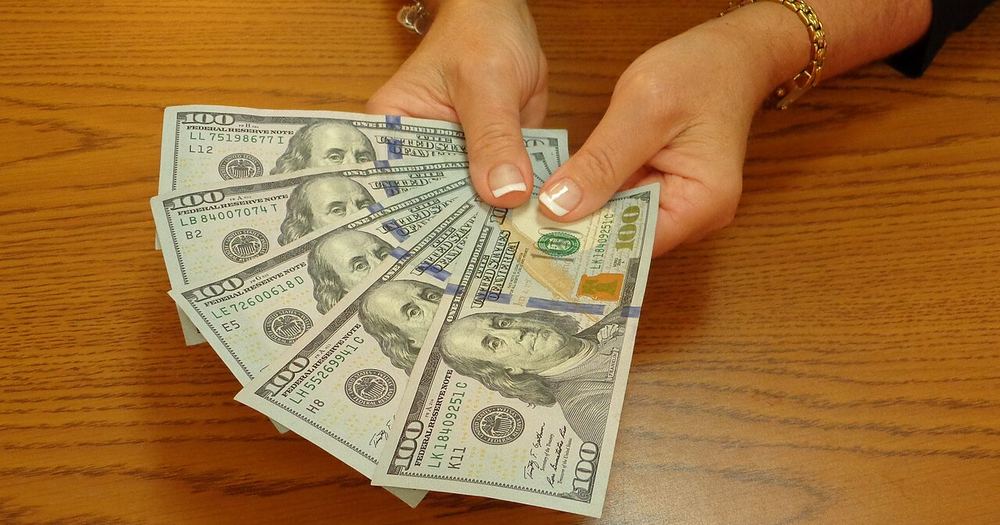

Why the Stake Disappears
A stake-not-returned free bet does not return the original stake. The promotion pays only the profit on a winning wager, not the stake. The payout rule is stake × (decimal odds − 1). The minus one is the stake being stripped out of the return.
For a $10 free bet at 5.00, that arithmetic produces $40. A cash $10 at the same odds would return $50, stake included, but the free bet does not add the promotional stake back. The winning return is profit only, and the promotional stake is not part of the payout. That is why the minus one sits in the profit expression: the stake is not returned.
Some sources say stake-not-returned free bets are the most common type among the US sportsbooks it describes. That makes the missing stake a routine part of the product, not an exception buried in one operator’s terms.
The Math That Sets Cash Value
At decimal odds, Betting Maths and MyBookie give the same conversion: free-play winnings equal free-play amount × (decimal odds − 1). At decimal odds of 3.00, a $10 free bet pays $20. At 5.00, it pays $40.
For positive American odds, MyBookie’s guidance uses a parallel formula: free play amount × (positive odds ÷ 100). At +200, that multiplier is 2, so a $100 free bet returns $200. Some sources spell out what this means on the ticket: the $200 is the win profit, not the $300 that a cash $100 would return at the same price.
Both formulas describe the same subtraction. A bettor who thinks in American prices can convert +200 to a factor of 2 and multiply the face value without adding the stake. The face amount never enters the pay line.
Why Longer Odds Change the Real Value
Because the stake is not returned, the odds do more work than they would in a cash wager. Higher prices create a larger profit component, so the same face value pays more if the bet lands. A $10 free bet at 2.00 pays $10. The identical $10 free bet at 5.00 pays $40. A $100 free bet at +200 pays $200 in profit.
The trade-off is straightforward: longer odds also mean the bet wins less often. A free bet therefore cannot be valued as though it were an account credit. Its value depends on how the bettor prices the wager. OddsShopper’s free bet calculator asks for the odds precisely because the price determines the conversion.
What Hedging Changes
Hedging removes some of that uncertainty. OddsShopper gives the hedge-stake formula as hedge stake = F × (O(b) − 1) ÷ O(h), where F is the free bet face value, O(b) is the odds taken with the free bet, and O(h) is the hedge odds. The resulting locked-in profit is F × (O(b) − 1) × (O(h) − 1) ÷ O(h).
For example, a $10 free bet at 5.00 with hedge odds at 2.00 calls for a $20 hedge stake. The profit locks at $20 whether the free bet wins or loses. Hedging is a separate method, not a requirement. A bettor can also let the free bet ride and accept the variance.
The simple conversion remains the same on every price: multiply the face value by decimal odds minus one, and do not add the stake back. A $10 free bet is not a $10 bill. It is a conditional payout whose size is chosen at the bet screen.
General information about how bets, offers and casino rules work, not a recommendation to place any wager. Rules, limits and prices change; check the operator's or agency's own page before acting.