
Blackjack Pays 6:5 Instead of 3:2: What the Change Costs You Per Hour
A natural blackjack lands about once every 21 hands. Pay that hand 6:5 instead of 3:2, and a $10 bettor loses $3 every time it hits — a small-looking haircut that compounds into a measurable drain on any session.
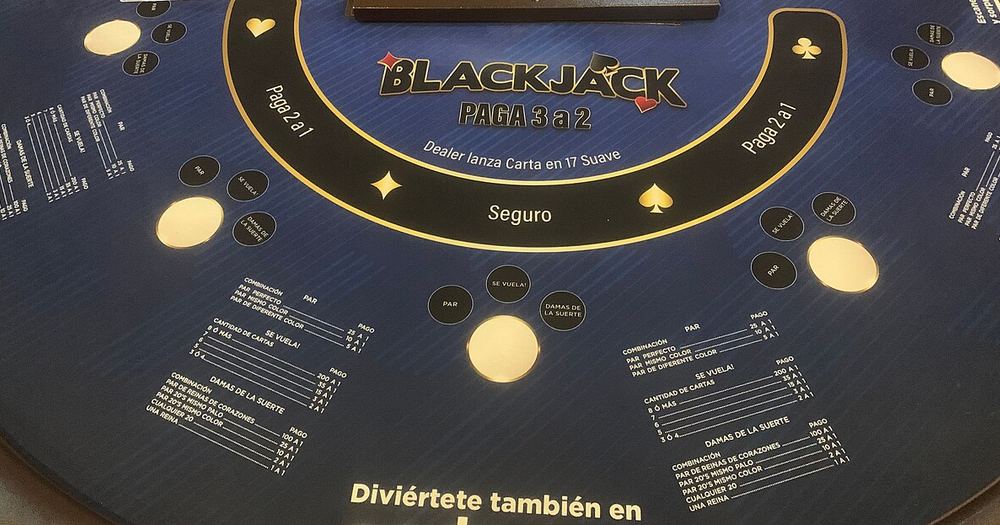

How 6:5 changes one hand
A natural blackjack is the strongest hand in the game: an ace paired with any ten-value card, paid automatically at better than even money. The standard payoff is 3:2 — a $10 wager returns $15 in profit. The 6:5 alternative, which has been written into rules by regulators from Massachusetts to Colorado, pays just $12 on that same ten bucks. The difference is not cosmetic. It takes the most valuable hand a player can get and shrinks its reward by 20 percent.
How often that hand appears depends on the shoe. The probability of a natural from a freshly shuffled single deck is 4.83 percent. In a six-deck shoe, the number drifts to about 4.75 percent. Both sit close to the familiar one-in-21 neighborhood. The Massachusetts Gaming Commission’s rules, reported by WBUR in 2019, explicitly contemplate a 6:5 variation alongside the traditional 3:2 game. Colorado’s Division of Gaming went further in 2010, lowering the minimum allowable blackjack payoff from 3:2 to 6:5 while still letting casinos offer richer odds. The takeaway is clear: the 6:5 table is legal, profitable for the house, and costs the player exactly three dollars for every natural at a $10 minimum.
What the payout change does to the house edge
The house edge is not the payout itself but the expected loss every decision, and blackjack’s edge is famously thin when the rules are fair. The house edge grows by about 1.4 percentage points when the natural pays 6:5 instead of 3:2. Another source puts the number at 1.39 percentage points. Either way, the addition is large for a game where a full-percentage swing can turn a playable table into a money-burner.
What makes the math counterintuitive is that 6:5 does not nibble away at every hand. It only bites on the rare natural, but that hand accounts for a fat slice of the player’s long-run expectation. By shrinking its payout, the house takes a bigger rake on the outcome that keeps the game close to break-even. A player who sits at a 6:5 table is effectively playing a variant where the house edge more than doubles compared with a 3:2 game with otherwise identical rules.
Dollars per 100 hands
Bringing the percentages down to an actual wallet is simpler than it sounds. If a $10 bettor sees roughly 4.8 naturals per 100 hands — the midpoint of the single-deck and six-deck figures — then a 3:2 game returns $72 across those naturals ($15 each). A 6:5 game returns $57.60. The difference is $14.40. That squares with an example pegging the cost at about $14 per $1,000 of action, exactly the total wager in 100 hands at $10.
The loss works out to a little more than a full extra bet every hour from the naturals alone, before the player has made a single strategic decision. And the penalty scales linearly. On a $25 table, the hit is $36 per 100 hands. At $50, it jumps to $72. Because the natural frequency barely changes with deck count, the per-100 cost stays sticky no matter the shoe size.
What a player loses per hour
Per-100 numbers are useful, but the clock is what matters at the felt. The translation is straightforward: multiply the per-100 loss by the number of hands the dealer gets through in an hour. A slow table with a full set of side-bet followers might deliver 50 hands. A quick head-to-head game can push past 100.
Using a moderate 70 hands per hour — a pace many players will recognize on a midweek afternoon — the natural penalty on a $10 wager comes to about $10.08 an hour. That is real money siphoned from the bankroll before anything else goes wrong. Someone playing a $25 hand at 80 hands an hour is giving up $28.80 per hour solely because of the payout rule. The mathematics of a single natural turns into a quiet, steady fee that the house collects whether the player is winning or losing.
No hand in blackjack pays like a natural, and no slot in the rulebook hollows it out faster than 6:5. The next time you slide your chips toward the betting circle, check the felt for a payout ratio. The difference in your wallet will show up in about 21 hands.
General information about how bets, offers and casino rules work, not a recommendation to place any wager. Rules, limits and prices change; check the operator's or agency's own page before acting.